
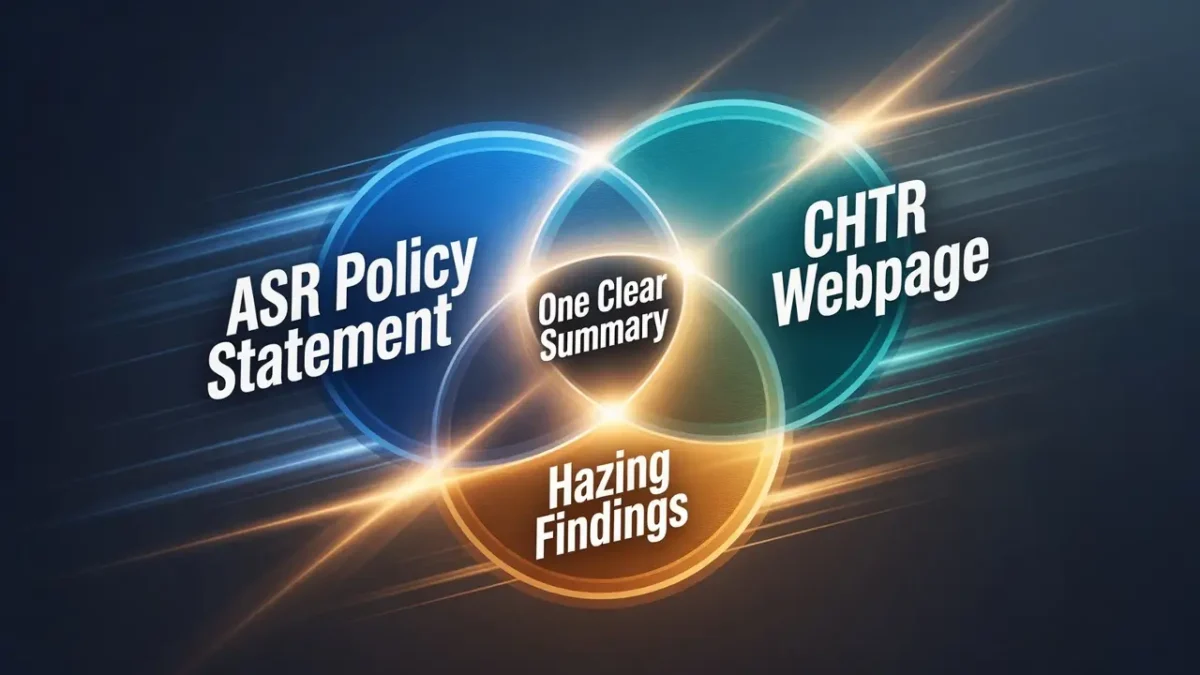
 As we review Clery Act Annual Security Reports and new Campus Hazing Transparency Reports, we are seeing a common gap. Too often, institutions publish a Transparency Report that lists hazing violation findings—or a page stating there are no findings—without including a clear, easy-to-read summary of the policies and investigation process that produce those findings.
Connecting the Findings to the Process
That summary is the same one required in the Annual Security Report. The Stop Campus Hazing Act was structured so that anyone reading the Transparency Report can also see this information without having to look up the Annual Security Report separately. Without it, students and parents see the outcomes but not the rules and process that led to them.
The Law Links Three Things—But the Link Is Easy to Overlook
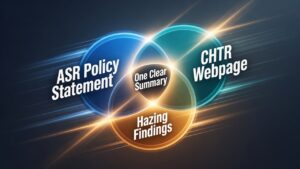 The law connects three things. An institution must summarize how it investigates hazing reports in its Annual Security Report. That same process is then used to decide whether a reportable hazing violation occurred. The public webpage that lists those violations must also summarize the same process. The connection is clear if you read the statute carefully, but it is easy to miss if you’re looking for a direct statement connecting the dots.
Because the U.S. Department of Education has not yet issued guidance, this requirement has not been as widely understood as it could have been. The timing has also created challenges: the first Campus Hazing Transparency Reports were due before institutions were required to include the new hazing policy statement in their Annual Security Reports.
Use the October 1 Deadline to Align Both Documents
The October 1 deadline for this year’s Annual Security Reports gives institutions a clear chance to get this right the first time and keep everything consistent. The same plain-language summary prepared for the Annual Security Report can be placed on the Campus Hazing Transparency Report webpage. Because many institutions have recently reviewed and updated their hazing policies, it is also important that these summaries reflect the current version of those policies.
What Belongs in the Plain-Language Statement
In plain language, it should state that hazing is prohibited, explain how and to whom it should be reported, give a short version of the institution’s definition of hazing, identify who handles investigations, describe the basic steps of the process, note what standard is used to decide if a violation occurred, explain how the outcome is shared with the parties, and list the range of possible sanctions. If the institution also applies its hazing rules to faculty, staff, or others beyond students and student organizations, that information must be included as well. Student conduct staff—and human resources staff when employees are covered—are usually best positioned to draft the process description accurately. A summary of the criminal law must also be included.
Conclusion
The October 1, 2026 deadline gives institutions a straightforward chance to close this gap. Prepare the plain-language summary for the Annual Security Report, place that same summary on the Campus Hazing Transparency Report page, and make sure it reflects the current policies. Students and parents deserve to see both the findings and the process that produced them—in one clear place.
This post is for general information only. It is not legal advice and does not create an attorney-client relationship. If you need legal advice, please contact a qualified attorney.
