
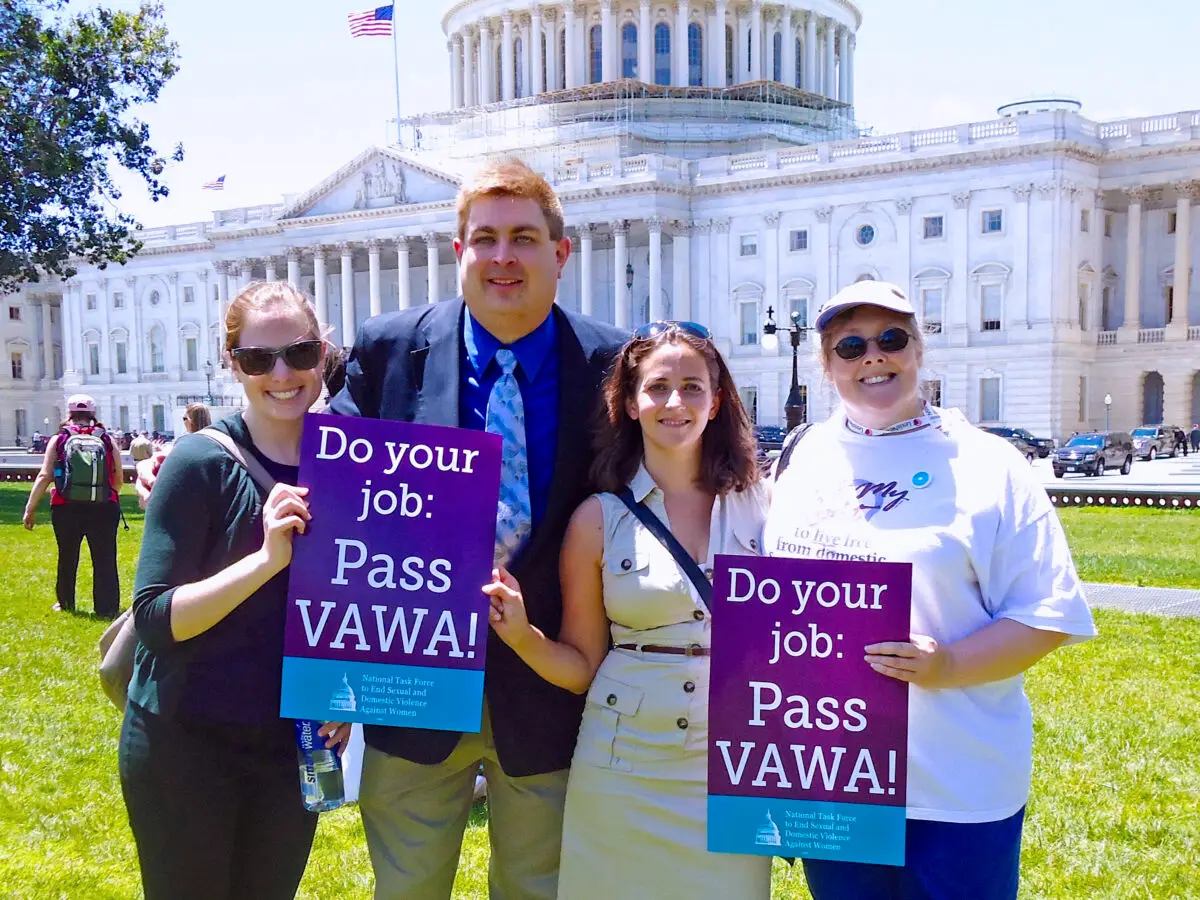
S. Daniel Carter, a leading campus safety expert and former Director of Public Policy at Security On Campus, Inc. (SOC, now the Clery Center), played a central role in the creation, advocacy, and implementation of the Violence Against Women Act (VAWA) amendments to the Clery Act, specifically Section 304 of Public Law 113-4. As the architect behind key provisions of the Campus Sexual Violence Elimination (SaVE) Act, Carter’s contributions have shaped federal campus safety laws, enhancing protections against sexual assault, dating violence, domestic violence, and stalking on college campuses.
Creating the Foundation: Drafting the SAFE Blueprint
In April 2010, responding to the Center for Public Integrity’s investigative series on campus sexual assault, S. Daniel Carter drafted the Campus Sexual Assault Free Environment (SAFE) Blueprint. On April 16, 2010, Carter and Melissa Lucchesi from SOC presented the Blueprint to the Congressional Crime Victims’ Rights Caucus as part of National Crime Victims’ Rights Week activities.
This groundbreaking document proposed comprehensive amendments to the Jeanne Clery Act and Title IX, including expanded crime reporting requirements, mandatory prevention education programs (such as bystander intervention), and strengthened victims’ rights like confidentiality protections and fair disciplinary processes. The blueprint directly influenced the standalone Campus SaVE Act (H.R. 6461), introduced by Rep. Tom Perriello in November 2010, which aimed to modernize the 1990 Clery Act to address the full spectrum of gender-based violence.
Carter’s work built on decades of Clery Act advocacy, incorporating insights from survivors like Liz Seccuro and collaborations with organizations such as RAINN and Break the Cycle. His expertise ensured the provisions focused on transparency, victim support, and enforcement—core elements that became law in Section 304 VAWA amendments.
Securing Legislative Passage: Coalition Building and Advocacy
Carter led SOC’s efforts to secure bipartisan support for the Campus SaVE Act. When standalone bills (S. 834 and H.R. 2016 in 2011) stalled, he coordinated a coalition of over 20 groups, including RAINN, SAFER, AAUW, and the VTV Family Outreach Foundation, to integrate the provisions into the VAWA Reauthorization Act (S. 1925) on November 30, 2011. Carter publicly praised Senators Patrick Leahy and Mike Crapo, stating, “We are grateful for the support of Senators Leahy and Crapo of this important work and thank them for their leadership.”
His advocacy extended to public events, such as the June 26, 2012, U.S. Capitol rally supporting VAWA, where he represented the VTV Family Outreach Foundation. Amid partisan debates, Carter’s persistent lobbying helped ensure the SaVE provisions survived in S. 47, leading to President Obama’s signing of Public Law 113-4 on March 7, 2013. This made Section 304 a landmark reform, mandating annual security reports, prevention programs, and victim accommodations at U.S. colleges.
Implementing the Law: Negotiated Rulemaking and Compliance Guidance
Post-enactment, S. Daniel Carter served as a non-federal negotiator on the U.S. Department of Education’s VAWA Negotiated Rulemaking Committee from January to April 2014, representing the VTV Family Outreach Foundation’s 32 National Campus Safety Initiative. Alongside Laura Dunn of SurvJustice, he contributed to consensus on draft regulations, resulting in final rules effective July 1, 2015. These regulations clarified compliance for institutions, including good-faith efforts for 2014 Annual Security Reports.
Today, as President of Safety Advisors for Educational Campuses, LLC, Carter continues to provide Clery Act training and consulting through SafeCampuses.biz, helping colleges implement VAWA Clery amendments and foster safer environments.