
 When Congress enacted the Jeanne Clery Campus Safety Act in 1990, it ushered in a new era of institutional transparency. For too long, however, compliance has been treated as a seasonal bureaucratic hurdle—a “box to check.”
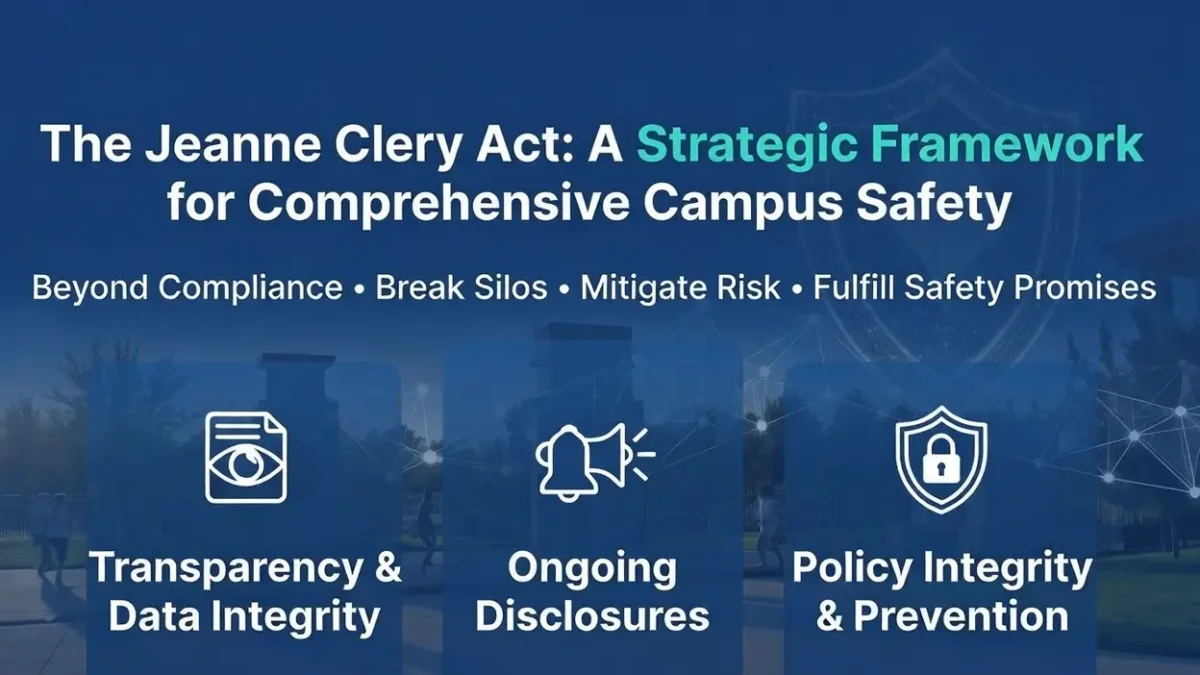
At SAFE Campuses, LLC, we believe this is a missed opportunity. When correctly implemented, the Clery Act serves as the foundation for a comprehensive campus safety framework that breaks down organizational silos, mitigates risk, and fulfills the safety promise made to every student and employee.
Beyond the “Bureaucratic Check-Box”
Compliance with federal disclosures is the floor, not the ceiling. To move beyond mere data collection, leadership must reframe the Clery Act as a holistic management tool.
While the consolidated Annual Campus Safety Report is a critical annual milestone, the Act’s true power lies in its day-to-day application. Requirements such as the public crime log, timely warnings, and emergency notifications are real-time safety mechanisms. When integrated into a broader strategy, these tools allow leadership to identify trends, mitigate threats, and respond with agility before a crisis occurs.
The Pillars of a Modern Safety Framework
A comprehensive framework under the Jeanne Clery Campus Safety Act rests on three interconnected pillars:
- Transparency & Data Integrity: This pillar demands the accurate, multidisciplinary collection and classification of crime data. It now formally includes hazing transparency, ensuring that reports of hazing are captured, categorized, and disclosed with the same rigor as other criminal offenses.
- Ongoing Disclosures: This involves real-time communication via alerts and notifications. By treating this as a dynamic, year-round operation rather than a static reporting function, institutions better empower their community to protect themselves.
- Policy Integrity & Prevention: This pillar requires the formalization of safety policies into a cohesive “handbook,” covering sexual misconduct (VAWA/Title IX), substance abuse, and emergency response. Crucially, this now includes hazing prevention, integrating robust, evidence-based education and programming directly into the institution’s core safety policies.
The Clery Committee: A Multidisciplinary Approach
Safety is not the sole responsibility of any single department. A high-functioning safety framework requires a multidisciplinary team—or Clery Committee—comprising stakeholders from across the institution, including Student Affairs, Title IX, General Counsel, Athletics, and Human Resources.
By bringing these disparate voices together, an institution ensures that “all things campus safety are Clery, and all things Clery are campus safety.” This collaborative approach eliminates departmental silos, ensures data integrity, and creates a culture of shared accountability.
From Reports to Resources
 The consolidated Annual Campus Safety Report should not be a document that gathers digital dust. We advocate for transforming this report into a readable, plain-language Campus Safety Handbook.
When a report is concise and accessible, it moves from a legalistic requirement to a “superpower”—telling a prospective student or a concerned parent exactly what the institution does to keep them safe and what they can do to help.
Partnering for Peace of Mind
Realizing this vision requires more than just technical knowledge; it requires a partner who understands the intersection of law, policy, and student life.
SAFE Campuses, LLC helps institutions transform their compliance obligations into a strategic asset. By providing the expertise to navigate the complexities of the Jeanne Clery Campus Safety Act, we ensure that your institution isn’t just “compliant”—it’s proactively safe.