
Origins of the VAWA Amendments to the Clery Act
The origins of what became the VAWA amendments to the Clery Act trace back to a confluence of investigative journalism, tragic events, and long-standing advocacy efforts aimed at addressing gaps in federal campus safety laws. In 2009, the Center for Public Integrity (CPI), in collaboration with National Public Radio (NPR), published a groundbreaking series titled “Sexual Assault on Campus: A Frustrating Search for Justice“. This investigation exposed systemic failures in how colleges handled sexual assault cases, including underreporting, lenient punishments for perpetrators, and barriers that revictimized survivors.
In response, Security On Campus, Inc. (now the Clery Center), a nonprofit founded by Connie and Howard Clery after their daughter’s 1986 murder, developed the “Campus Sexual Assault Free Environment (SAFE) Blueprint“ in April 2010. This proposal sought amendments to the Clery Act and Title IX to enhance transparency, victim support, and enforcement.
The SAFE Blueprint built on earlier advocacy, including Juley Fulcher’s efforts since 1997 as director of policy programs at Break the Cycle to include dating violence, domestic violence, and stalking in the Clery Act’s reporting requirements. Fulcher argued that young adults on campuses were particularly vulnerable, stating, “It’s important to know what the problem is in order to be able to solve it… It’s going to help colleges and universities recognize how big the problem is on their campus so that they can now take effective measures to deal with it.”
The expansion from focusing solely on sexual assault to encompassing broader forms of intimate partner violence was catalyzed by the May 2010 murder of University of Virginia lacrosse player Yeardley Love by her ex-boyfriend, George Huguely. This high-profile case highlighted deficiencies in the existing Clery Act, which required reporting of sexual assaults but not dating violence or stalking.
Virginia Congressman Tom Perriello, inspired by such “shocking wake-up calls” and statistics showing high rates of unreported assaults among college women, developed a bill based on SOC’s “Blueprint”. The first version of the Campus Sexual Violence Elimination Act (Campus SaVE Act) as H.R. 6461 was introduced on November 30, 2010. Perriello’s Congressional Record statement emphasized updating the 1990 Clery Act to cover the “full range of intimate partner violence,” including stalking and dating violence, while promoting bystander intervention. The measure aimed to address not just sexual assault but the spectrum of relationship abuse, reflecting input from advocates who noted that victims often faced inadequate support.
Multiple Versions and Inclusion in VAWA Reauthorization
The Campus SaVE Act underwent several iterations before its inclusion in broader legislation. Pennsylvania Senator Robert Casey introduced a Senate companion bill, S. 4039, on December 16, 2010. In the next Congress, Casey reintroduced it as S. 834 on April 14, 2011, with Representative Carolyn Maloney introducing the House companion, H.R. 2016, on May 26, 2011. Maloney’s Congressional Record remarks highlighted the bill’s goal to close “a serious gap in the law” by mandating clear policies and prevention programs.
Standalone passage stalled, but on November 30, 2011, provisions from the SaVE Act were incorporated into the bipartisan Violence Against Women Reauthorization Act (S. 1925), introduced by Senators Patrick Leahy and Mike Crapo. S. Daniel Carter, then Director of Public Policy at Security On Campus, Inc., praised this move, stating, “We are grateful for the support of Senators Leahy and Crapo of this important work and thank them for their leadership.” This integration tied campus reforms to VAWA’s broader framework for combating gender-based violence.
Supporting Organizations
A diverse coalition of organizations rallied behind the Campus SaVE Act, uniting victim rights groups, women’s advocacy networks, and campus safety experts. Key supporters included Security On Campus, Inc., the Rape, Abuse & Incest National Network (RAINN), Students Active for Ending Rape (SAFER), Break the Cycle, and the American Association of University Women (AAUW). These groups emphasized the Act’s potential to improve transparency and victim protections.
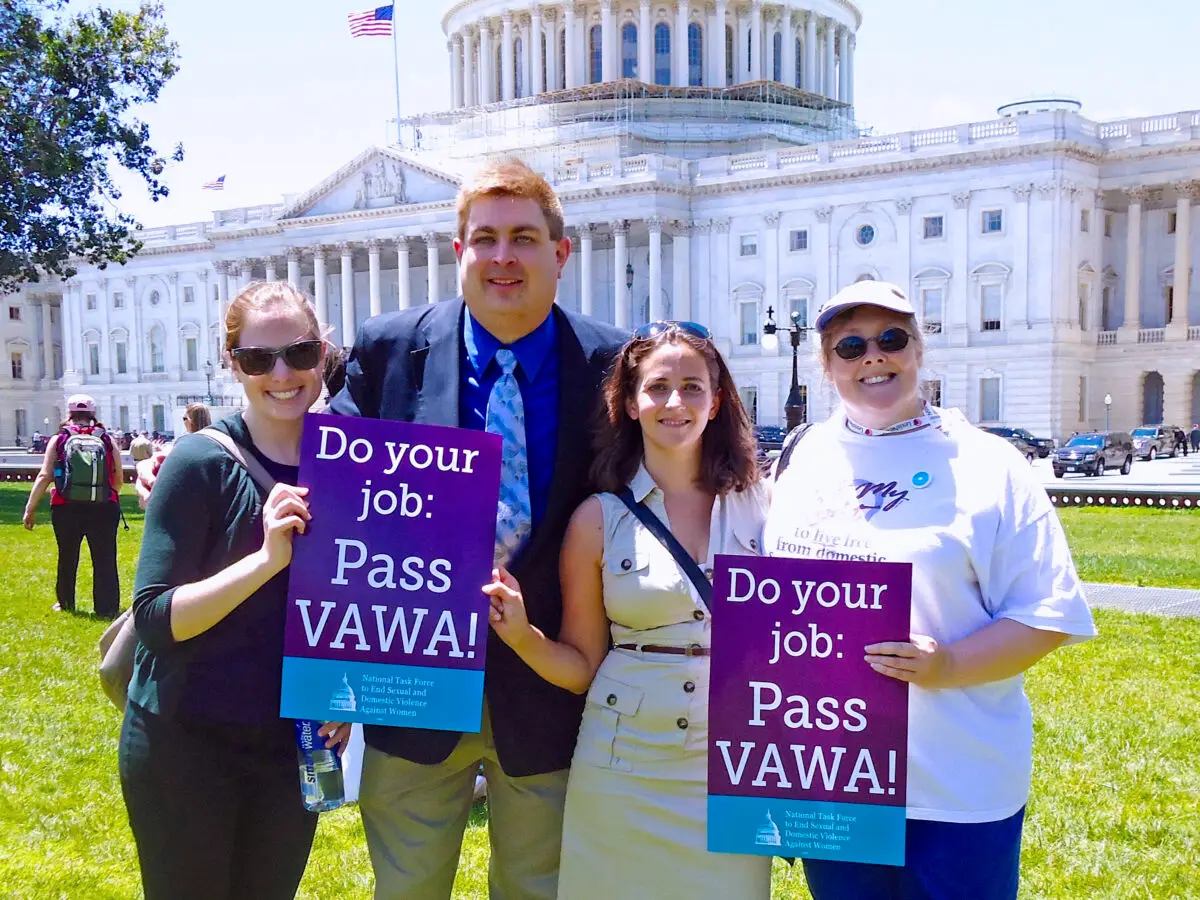
Higher education associations like the American Council on Education expressed mixed feelings about added compliance burdens but did not oppose the measure, acknowledging its “worthy goals.” The VTV Family Outreach Foundation, formed after the Virginia Tech shooting, also participated in related advocacy, such as a June 26, 2012 rally at the U.S. Capitol supporting VAWA reauthorization. This broad support underscored the Act’s role as a victim-centered reform.
Legislative Process from April 26, 2012, to March 7, 2013
 The legislative process from April 26, 2012, to March 7, 2013, was marked by partisan tensions but ultimate bipartisan success. On April 26, 2012, the Senate debated and passed S. 1925 by a 68-31 vote, with Senator Chuck Grassley critiquing the bill’s weak fairness standards for campus proceedings but failing to amend it significantly. However, the House passed a narrower version (H.R. 4970) in May, omitting expansions for LGBTQ individuals, Native American women, and immigrant victims, leading to a stalemate. The bill failed to pass in 2012 due to these divisions, marking the first lapse of VAWA since 1994.
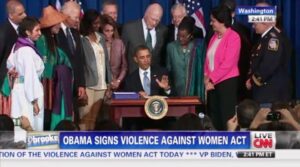
Reintroduced as S. 47 in January 2013 with no changes to Section 304 (the SaVE provisions), it passed the Senate again on February 12. Advocacy intensified, including a February 26 press conference led by House Minority Leader Nancy Pelosi, where survivor Laura Dunn urged passage, sharing her story to highlight the need for protections. The House passed S. 47 on February 28 by 286-138, and President Obama signed it into law as Public Law 113-4 on March 7, 2013.
Epilogue: 2014 Negotiated Rulemaking and Compliance Timeline
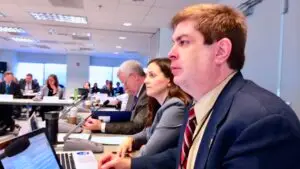
As an epilogue, the U.S. Department of Education’s Negotiated Rulemaking Committee convened from January 13 to April 1, 2014, to implement the VAWA amendments. Laura Dunn, founder of SurvJustice, and S. Daniel Carter, representing the VTV Family Outreach Foundation, served as non-federal negotiators, contributing to consensus on draft regulations.
The process resulted in a Notice of Proposed Rulemaking in June 2014 and final regulations in October, effective July 1, 2015. Institutions were required to make good-faith efforts earlier, with the first Annual Security Reports incorporating new provisions due October 1, 2014. These amendments replaced the 1992 Campus Sexual Assault Victims’ Bill of Rights in the statute, expanding its scope.
Conclusion
In conclusion, the VAWA amendments to the Clery Act represent a pivotal evolution in federal policy, born from tragedy and advocacy, to foster safer campuses. As Dunn reflected on the legislation’s impact, “Sexual violence is a massive problem [that is] overwhelming to address… Knowing that the Department of Education and the Department of Justice are supporting universities is very heartening… I hope from here we continue to build protections for the most vulnerable in our society.” Its passage not only addressed immediate gaps but set a foundation for ongoing reforms in combating gender-based violence.